


Classical KING
3.8121.00 Reviews
App Specs
- Version
- 7.0.8
- Updated On
- License
- Free
- Downloads
- 100,000+
- Developer
- Classical KING 98.1
- Categories
- Music & Audio
- Platform
- Android
Screenshots
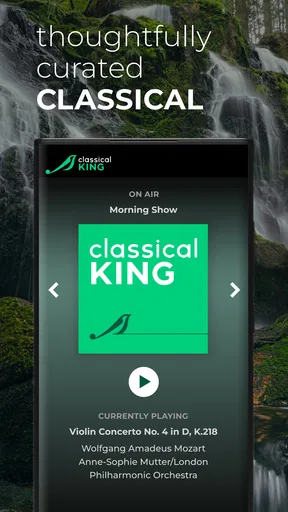
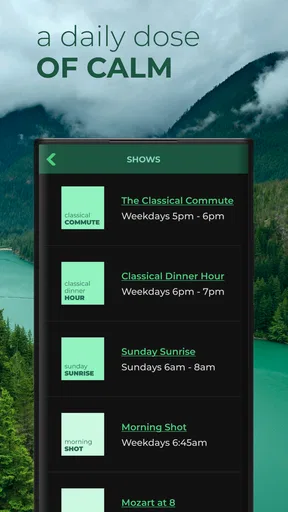
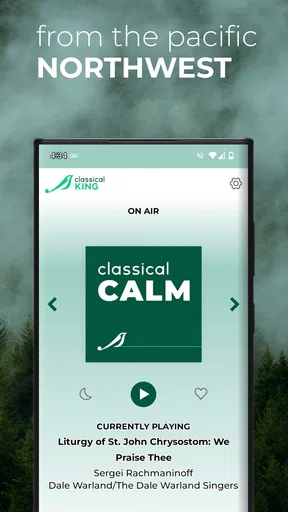
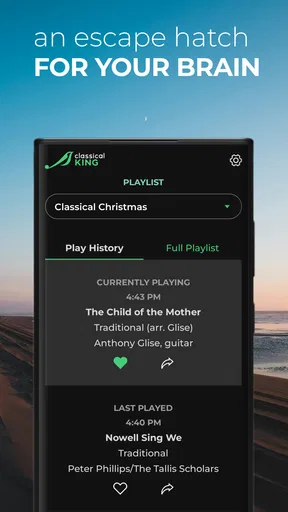
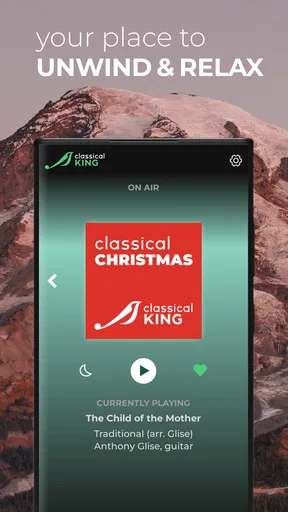
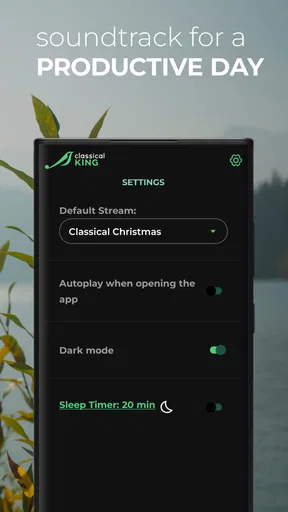
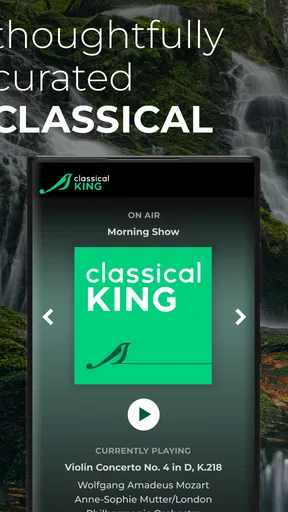
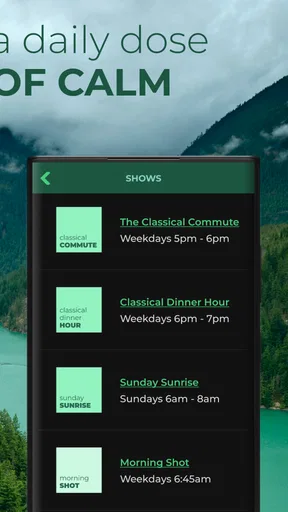
 Analysis by AppCompare
Classical KING is the kind of music and audio app I open when I want a calmer listening session without building a playlist first. It comes from Classical KING 98.1 and focuses on streaming classical music rather than trying to become a full music library, social network, or general-purpose audio player. That narrow purpose is its biggest appeal: choose the station, settle into the sound, and let the programming carry the evening.
I found the experience most useful during work that benefits from a steady background, such as reading, cooking, sorting email, or winding down before bed. It is also a practical choice for someone who enjoys classical radio but does not want to manage albums, artists, downloads, and queues manually. The app is free, carries an Everyone age rating, and has built a sizeable audience with over 100 thousand installs. Its average score is 3.9 from around 500 ratings, which suggests a generally positive reception with enough room for individual experiences to vary.
My overall impression is straightforward: this is a focused way to listen to Classical KING, not a replacement for a large on-demand service. If you want a reliable station-style stream and appreciate the idea of letting a broadcaster choose the next piece, it makes sense. If you expect every concerto to be searchable, downloadable, or replayable whenever you want, the more traditional music services will probably suit you better.
How the current listening experience fits into everyday use
When I think about using Classical KING in a shared home, its station-first approach feels useful precisely because nobody has to curate a playlist before the room can have music. I’d treat it as a shared listening option for a kitchen or living room, while keeping personal music accounts and exact listening preferences separate where needed. That practical boundary leads to the next question: what should each person expect when they open it?
A simple station-first approach
The central experience is intentionally uncomplicated. Instead of asking me to decide what to play from a huge catalog, Classical KING puts the station itself at the center. That changes the rhythm of using the app. I spend less time browsing and more time listening, which is particularly welcome when I am already busy with something else.
That design also makes the app approachable for people who are not deeply familiar with classical music. I do not need to know the composer, period, or exact recording I want before starting. A station stream can introduce works I might not have selected on my own, and that element of discovery feels more natural than repeatedly choosing familiar names from a personal library.
The trade-off is control. A station stream is not the same as an on-demand catalog. I have to accept the programming direction and the timing of the broadcast. For me, that is a strength when I want background listening, but it becomes a limitation when I have a specific symphony or performer in mind.
Worth Reading Before You Choose

Switching to Android Auto Means Rethinking Your Driving Routine

Google Calendar Makes a Crowded Week Easier to Manage

Baby Panda World Brings Quick Play to Modern Phones, but Its Game Library Feels Busy

ESPN’s Live Game View Makes Following Close Games Easier

QuizzLand Review: A Good Fit for Short Trivia Breaks, Not Every Player

Basketball Stars: Multiplayer Is Fast, but Can It Recover When Matches Go Wrong?
Where the app works best
I see three especially good situations for it. First, it works well as a morning start-up soundtrack: I can begin the stream before making breakfast and avoid the distraction of choosing tracks. Second, it suits focused desk work because the music provides continuity without requiring constant interaction. Third, it is useful for a quiet evening when I want something more considered than random background playlists but do not want to search through a large service.
There is also a useful social advantage to station listening. If I am sharing a room with someone, a broadcast can feel less personal and less repetitive than handing over control of a carefully selected playlist. It creates a common listening space, while the broadcaster supplies the structure.
For the smoothest routine, I would start the app before beginning the activity rather than waiting until the middle of it. That gives the stream time to begin and avoids turning a short listening break into a browsing session. I would also keep the phone connected to a stable network, since the core experience depends on streaming rather than offline playback.
Sound quality and the meaning of “high-definition”
The store summary presents the app as a way to stream classical music in high-definition. In practical terms, that points toward a listening experience where detail matters: strings, reverberation, piano attack, and the contrast between quiet passages and fuller orchestral moments all benefit from a clean signal. I enjoyed using headphones or decent speakers more than relying on a small phone speaker, because classical recordings can lose much of their character through tiny hardware.
Still, I would not judge the app only by the phrase “high-definition.” The final result depends on the phone, headphones, speaker, network, and listening environment. A busy commute with traffic noise will hide details that are easy to notice in a quiet room. Likewise, inexpensive Bluetooth hardware may make the difference between the source and the stream less obvious.
My practical advice is to test it in the place where you will actually use it. A short session with headphones at home tells you more than a quick check through a phone speaker. If you mainly listen while moving around, convenience may matter more than fine sonic detail. If you use it for attentive listening, better speakers make the app’s classical focus more rewarding.
What the version tells existing users
The current version is 7.0.8, which gives the app a more mature feel than a newly launched experiment. Classical KING has been available since June 1, 2011, so it has had a long presence in mobile listening. I read that history as evidence of continuity rather than a promise that every part of the experience will feel modern.
For existing users, a current version number is reassuring because it indicates an actively maintained release line. It is sensible to keep the installed app updated through the normal app-store process, especially for compatibility with newer phones and operating-system changes. The minimum operating-system requirement is iOS 11 or later, so owners of much older Apple devices should check compatibility before planning around it.
The important distinction is between maintenance and transformation. A version update can improve stability or compatibility without changing the basic station-first concept. I would not install the app expecting it to suddenly behave like a full subscription catalog. Its identity remains tied to streaming Classical KING, and that consistency is likely more important to regular listeners than a long list of extra tools.
How it compares with ordinary music alternatives
Compared with a large on-demand music service, Classical KING is less flexible but less demanding. A catalog service is better when I want to select a particular recording, create a carefully ordered playlist, revisit a favorite movement, or explore several interpretations of the same work. It also tends to make personal collections and search central to the experience.
Compared with a generic internet-radio app, this app has a clearer musical identity. A broad radio directory may offer many stations, but it can also make the listener work harder to find one that feels consistent. Here, the focus is already established. That makes it a better fit for someone who specifically wants Classical KING rather than a rotating collection of unrelated streams.
Compared with locally stored music, streaming is more convenient at the start because I do not need to organize files or maintain a personal collection. The cost is dependence on a live connection and on the station’s programming. I would choose local files for travel, unreliable coverage, or exact control; I would choose this app for effortless, curated listening.
Small workflows that make the experience better
One useful workflow is to treat the app as a transition tool rather than only as entertainment. I can start it when moving from a noisy part of the day into reading or study, allowing the change in sound to signal that it is time to slow down. Because I am not selecting individual tracks, the routine feels less fragmented.
A second is to use it for musical discovery without turning discovery into research. When a piece catches my attention, I can note the time or remember the musical character and investigate it later through a separate source. This keeps the listening session uninterrupted while still giving unexpected works a path into my personal repertoire.
A third is to match the hardware to the task. For casual cooking or household chores, a compact speaker is enough. For chamber music, solo piano, or quieter passages, headphones reveal more nuance. The app does not need a complicated setup to be enjoyable, but the quality of the listening equipment changes how much value I get from the stream.
Finally, I would avoid treating it as a replacement for an alarm, downloaded playlist, or emergency travel soundtrack. A live station is excellent when the connection is dependable and the programming can remain in the background. It is a poor fit when I need guaranteed playback at a precise moment.
Where the current experience still falls short
The biggest limitation is the lack of on-demand certainty that comes with a station-based service. If I am in the mood for a particular composer, period, or recording, I may have to wait or switch to another app. That is not a defect in the idea of radio, but it is an important boundary for anyone comparing it with a full music platform.
The same issue affects repeat listening. A streaming station is designed around what is being broadcast now, not necessarily around saving a favorite performance for later. Listeners who like to replay a difficult passage, compare versions, or build a personal sequence will find a catalog-based alternative more satisfying.
Another limitation is that the app’s usefulness is tied to the quality of the connection and the listening environment. Streaming can be inconvenient in places with inconsistent coverage, and classical music is not always forgiving of interruptions. I would be cautious about making it my only audio option on a long journey.
There is also a difference between wanting music and wanting information about music. The station can provide a listening flow, but a dedicated classical catalog or reference tool may be better for learning about composers, performers, recording history, or the structure of a work. I would use Classical KING to hear music and another resource when I want deeper context.
Who should choose it, and who should skip it
I would recommend it to listeners who already enjoy classical radio, people who want calm background music, and newcomers who prefer guided discovery over a large menu of choices. It is especially appealing if the phrase “press play and let the station decide” sounds relaxing rather than restrictive.
It is also a sensible free option for households that want a dedicated classical stream without adding another paid music subscription. The absence of a purchase price lowers the barrier to trying it, although the real value depends on whether the station’s programming matches personal taste.
I would steer away from it if your main requirement is offline playback, exact track selection, extensive library management, or repeated access to one specific recording. Musicians and serious students may also want a service with stronger search and comparison tools. In those cases, this app can still serve as a discovery companion, but it should not be the main platform.
What I would watch in future updates
With a mature version line and a long history, I would pay attention to refinements that protect the simple listening experience rather than adding clutter. Better handling of interruptions, clearer information about what is playing, and dependable compatibility across current devices would all matter to regular listeners.
I would also look for improvements that help listeners bridge the gap between hearing a piece and finding out more about it. Even modest now-playing context could make unexpected discoveries more useful, provided it does not turn the app into a busy catalog interface. The best direction would preserve the station’s ease while giving curious listeners a little more to follow.
What I would not want is unnecessary complexity. The appeal here comes from avoiding the endless decisions found in large music platforms. Any future development should respect that the app’s strongest use case is relaxed, continuous listening, not competing feature by feature with every general music service.
My final take after using it
Classical KING succeeds because it knows what it is: a focused free audio app from Classical KING 98.1 for listeners who want a classical stream without assembling the experience themselves. Its 3.9 average and audience of over 100 thousand installs show that it has found a meaningful group of users, while the long-running release history suggests a product built around continuity.
I would keep it on my phone for work sessions, quiet mornings, and evenings when I want music with a sense of direction. I would pair it with an on-demand service for exact recordings and with downloaded audio for unreliable connections. That combination reflects the app’s real strength instead of asking it to do a different job.
If your ideal music app gives you total control, this will feel limited. If your ideal is a thoughtful classical station that gets out of the way and lets you listen, Classical KING is an easy one to try. Its best feature is not a complicated tool hidden in a menu; it is the relief of having fewer decisions between opening the app and hearing music.
Pros
- Simple rules make it easy for new players to start quickly.
- Classic gameplay offers a relaxing break without unnecessary complexity.
- Short rounds fit well into quick gaming sessions.
- Clean presentation keeps the focus on the board and pieces.
- Suitable for players who enjoy traditional strategy games.
Cons
- Limited variety may make the experience feel repetitive over time.
- Progression can feel minimal for players seeking deeper challenges.
- Some matches may become slow when opponents take their time.
- The game may not appeal to users who prefer modern game modes.
- Performance can vary on older devices or with limited resources.
FAQs for Classical KING
What is Classical KING, and how does the game work?
Classical KING is a traditional board-game experience centered on strategic play, where players move pieces across a board, capture opponents, and try to achieve the required winning objective. The app is designed to reproduce the familiar rules and turn-based rhythm of classic tabletop play, making it suitable for casual matches, practice sessions, and players who enjoy thoughtful rather than fast-paced gameplay.
Can I play Classical KING without an internet connection?
Classical KING may be useful for offline play when you want a quick match without relying on mobile data or Wi-Fi, particularly if the version installed includes local or computer-controlled opponents. Online features, advertisements, updates, leaderboards, or multiplayer matchmaking can require an internet connection, so availability may differ depending on the platform version and the specific mode selected.
Is Classical KING suitable for beginners?
Yes, Classical KING can be approachable for beginners because the basic controls are generally simple: select a piece, choose a legal move, and continue taking turns. However, understanding when to attack, defend, or sacrifice a piece requires practice. New players should begin with easier opponents or casual matches, review the rules carefully, and avoid expecting to master the strategy after only a few games.
Does Classical KING include multiplayer and single-player modes?
The available modes can depend on the edition and device, but a classical board-game app commonly offers single-player matches against computer opponents and may also provide local or online multiplayer. Before downloading, check the store description for the exact features supported on Android or iOS. If multiplayer is important to you, also verify whether an account, internet connection, or invitation system is required.
Is Classical KING free to download, and does it contain ads or in-app purchases?
Classical KING may be available as a free download, although the exact monetization model can vary between Android and iOS versions. Free editions may display advertising, offer optional purchases, or reserve certain features for a premium upgrade. Review the app-store listing before installing, and check the permissions and purchase information so you understand what is included in the basic version.


